
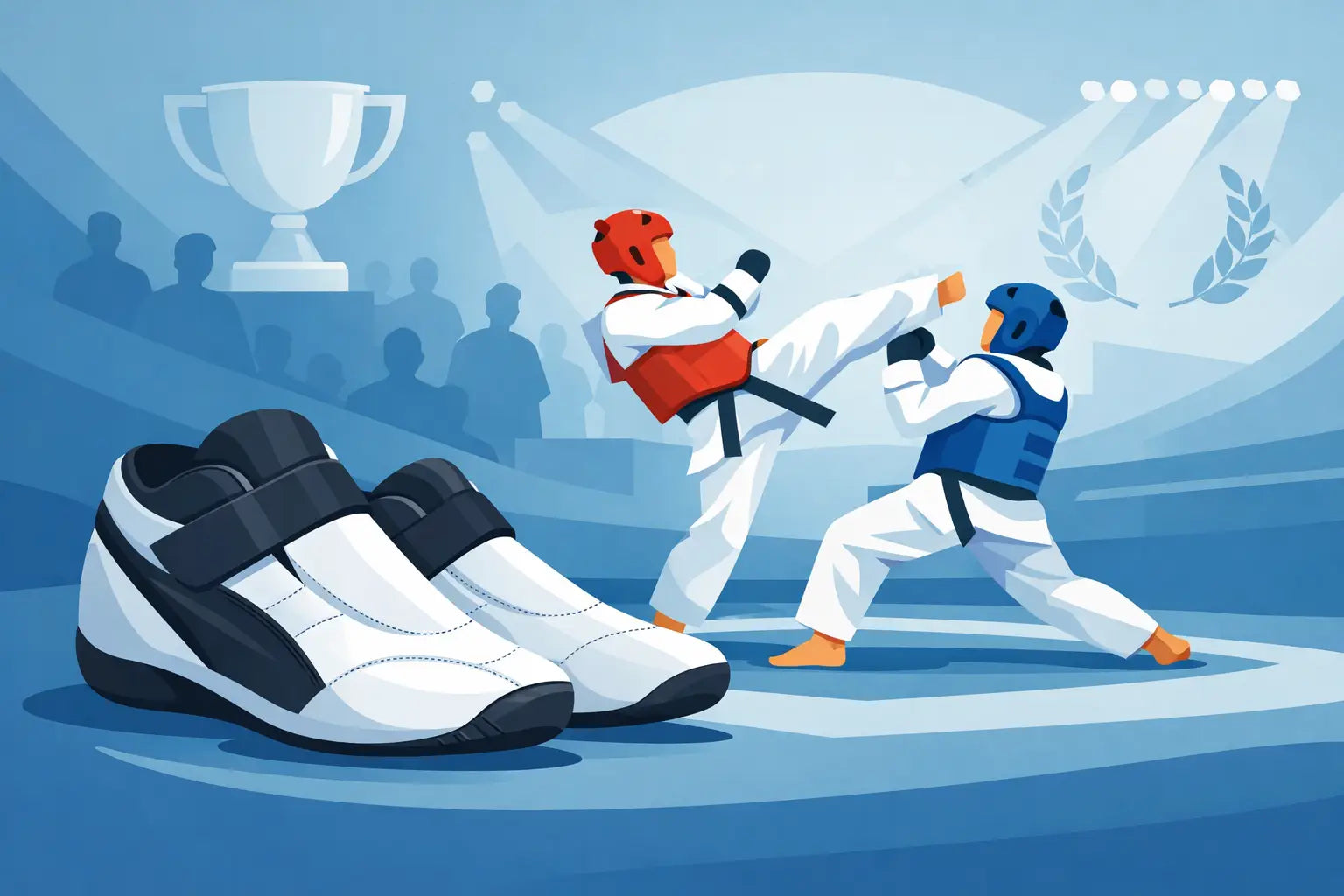
Tournament day is not the time to find out your shoes slide on a fast turn or feel stiff in the arch. The best taekwondo shoes for tournaments need to do one job well - support fast footwork without getting in the way of balance, speed, or rule compliance.
For most competitors, the right pair comes down to four things: federation acceptance, outsole grip, low-weight construction, and a fit that stays secure through repeated pivots. Brand matters, but not as much as how the shoe performs on the mat and whether it matches the event's expectations. If you compete regularly, small differences in sole feel and upper flexibility become obvious very quickly.
What makes the best taekwondo shoes for tournaments?
Tournament shoes are different from general gym sneakers and different from casual martial arts footwear. A good taekwondo shoe should feel close to the floor, stay light during movement, and let you chamber, step, slide, and kick without resistance. Bulk is usually a disadvantage. Extra cushioning may sound comfortable, but too much padding can reduce floor feel and slow directional changes.
Grip is a balancing act. You want enough traction to plant and drive, but not so much that the foot sticks during spinning techniques or quick angle changes. That is why experienced athletes often prefer a sole that grips cleanly without feeling tacky. On smooth indoor floors, this matters even more.
The upper should hold the foot securely without pinching the toes. A loose fit can create heel lift and instability, while an overly tight fit can fatigue the foot during multiple matches. Breathability also matters in long tournament sessions, especially for athletes moving between warm-up, staging, and repeated bouts.
Tournament rules come first
Before comparing models, check the event's requirements. Some tournaments allow taekwondo shoes broadly, while others may have specific expectations about non-marking soles, color, design, or approved competition gear. Local events can be more flexible than sanctioned state, regional, or national competitions.
If you compete in WT-aligned events, it is smart to verify whether the organizer has guidance on footwear before buying. Shoes that work perfectly for training are not always the best choice for tournament use. The safest route is to prioritize recognized martial arts brands and competition-oriented designs rather than cross-training shoes or minimalist indoor sneakers.
For coaches buying for teams, consistency matters too. If one athlete wears a compliant lightweight pair and another shows up in a shoe that looks more like court footwear, check-in can become harder than it needs to be. Reliable gear selection saves time.
Fit matters more than most athletes expect
A tournament shoe should fit closer than a casual shoe, but it should not crush the foot. Taekwondo movement is built around quick weight transfer, pivoting, and repeated forward pressure off the ball of the foot. If there is too much empty space inside the shoe, the foot slides and control drops off.
A proper fit usually means the heel stays planted, the midfoot feels held, and the forefoot still has enough room to spread naturally. Youth athletes are often bought shoes with too much growth room. That may save money short term, but it can hurt movement quality and confidence in competition.
Sizing also varies by brand. Some taekwondo shoes run narrow and performance-oriented, while others allow a more forgiving fit. If you have a wider foot, prioritize shape and upper flexibility instead of forcing a narrow model because it is popular. A secure wide fit performs better than a cramped narrow fit every time.
Signs your current shoes are wrong for competition
If you feel delayed on turns, lose traction on push-offs, or notice your toes pressing hard into the front during stops, your footwear may be working against you. Another common issue is calf and arch fatigue from a sole that is either too flat and unsupportive for your mechanics or too rigid for taekwondo-specific movement.
Wear patterns tell a story as well. If the outsole is unevenly worn or the sidewall is breaking down early, the shoe may not be built for the kind of lateral stress you create during sparring footwork.
Key features to look for when shopping
The outsole is the first place to look. Non-marking rubber is standard, but tread pattern and rubber feel matter more than the label alone. On tournament surfaces, you want predictable traction, not maximum stick. A sole that releases smoothly during pivots usually feels better than one that grabs too aggressively.
Weight should stay low. Heavier shoes can feel manageable in warm-up and then start to drag late in the day. Competitive athletes often notice the difference in repeated bounce movement and fast entry-exit exchanges. Lightweight construction helps preserve rhythm.
Flexibility in the forefoot is another priority. Taekwondo shoes should bend naturally where your foot bends. If the front of the shoe is stiff, kicking mechanics and quick step recovery can feel restricted. At the same time, the upper should not be so soft that the foot rolls over the platform during side movement.
Closure matters more than it seems. Traditional laces are still common because they allow a more adjustable lockdown. Slip-on styles can be convenient, but they are not always ideal for athletes who want a precise fit under match pressure. If you choose laces, make sure they stay tucked and secure.
Best taekwondo shoes for tournaments by athlete type
There is no single best option for every competitor. The right tournament shoe depends on age, division, movement style, and how often you compete.
For youth athletes, comfort and security usually come first. A junior competitor needs a shoe that is light, stable, and easy to wear for a full event day. Overly technical or narrow performance shoes can create distractions if the athlete is still developing confidence and foot control.
For adult recreational competitors entering local or regional events, the best choice is often a dependable all-around taekwondo shoe from a recognized martial arts brand. You do not always need the lightest or most aggressive model. You need predictable fit, clean traction, and a tournament-appropriate design.
For advanced or frequent competitors, performance details matter more. These athletes usually prefer a lower-profile sole, faster response, and a fit that feels almost glove-like through the midfoot. Small gains in control and movement efficiency become meaningful over multiple matches.
For coaches and club buyers, durability and consistency often lead the decision. If you are outfitting several athletes, look for models with reliable sizing, repeat availability, and tournament-suitable construction. AKSPORT US serves many buyers who shop that way - not just for one athlete, but for teams, schools, and academies that need gear aligned with actual competition use.
Common mistakes when choosing tournament shoes
One mistake is buying based on appearance alone. A sleek design does not guarantee mat performance. Another is assuming that any indoor shoe will work for taekwondo. Court shoes, wrestling shoes, and martial arts shoes may look similar from a distance, but they are built for different movement patterns.
Another issue is waiting too long to break them in. Even a good tournament shoe needs some floor time before competition. You want enough use to confirm grip and fit, but not so much wear that the outsole starts losing its best traction. The sweet spot is usually a few weeks of regular training before the event.
Some athletes also keep shoes too long. If the sole is slick, the heel counter is soft, or the upper has stretched out, replace them before an important tournament. Trying to squeeze one more event out of worn footwear often costs more in performance than the replacement pair would have.
How to test a pair before tournament day
Once you have a pair in hand, test them in real movement, not just while standing. Work through bounce steps, forward pressure, lateral movement, pivots, and fast kick retraction. Pay attention to whether the shoe follows the foot or feels like it lags behind.
You should also test on the closest surface possible to your competition floor. A shoe that feels excellent on one mat or gym floor may behave differently on another. If you spar in gear, test the shoes under full movement intensity. Footwear that feels fine during light drills can feel unstable once speed increases.
Heat build-up matters too. After twenty or thirty minutes, some shoes feel noticeably warmer or less secure as the foot sweats. That is worth catching early rather than during a semifinal.
When a more expensive shoe is worth it
Price should reflect performance, build quality, and competition suitability, not just branding. A more expensive taekwondo shoe can be worth it if you compete often, need reliable traction under pressure, or want a more refined fit that reduces movement waste.
That said, not every athlete needs a premium model. If you are competing a few times a year at local events, a solid mid-range tournament shoe may be the smarter buy. The goal is not to spend the most. The goal is to get the right level of performance for your competition schedule.
Parents and coaches should think the same way. Growing athletes may not need top-tier footwear every season, but they do need shoes that fit correctly, meet event expectations, and hold up through training and tournament use.
Final buying advice
If you are choosing between two pairs, pick the one that feels more natural in motion, not the one with the bigger claims. The best taekwondo shoes for tournaments are the pair you can trust when the round starts - light on the foot, stable on turns, and appropriate for the event. Buy early enough to test them properly, and your footwear becomes one less thing to think about when performance matters.